
Your Mail Carrier Needs Water. USPS Gave Them a Form to Fill Out.


The Frontline Factor — USPS's heat program checks every audit box: training, posters, a water source at the building. Carriers on the route still get none of it. The paper trail behind the gap.
(July 2, 2026). Around 160 million people were under extreme heat warnings or advisories as of Wednesday July 3rd 2026 as a dangerous heatwave continues to blanket much of the eastern half of the country. Parts of Ohio, Pennsylvania, New York, Massachusetts and North Carolina could set record highs through Saturday.
Most folks have the option to stay indoors or if they are on a journey, have enough bottles of water to keep them hydrated.
The 300,000+ mail carriers who work for the United States Postal Service (USPS) often do not have this option on their route.
While USPS has a Heat Illness Prevention Program that it touts as a way to inform, educate and lower the risks of heat exhaustion for its people, in practice over a decade it hasn't prevented multiple deaths of mail carriers due to working in extreme heat conditions without proper hydration.
When the heat policy ends at the break room door
In April 2025, the U. S. Postal Service told the National Association of Letter Carriers it was scaling back the annual heat-illness training every carrier was supposed to complete.
In its place: a shorter "annual refresher."
Return to sender
In April 2025, the U. S. Postal Service scaled back annual heat-illness training to a shorter 'annual refresher.' Despite NALC's requests, USPS has yet to provide full details, instead issuing another round of program updates on June 5, 2026.
The real question for any heat-safety program is not whether training happened, but whether anything changes for the person standing on a route at 2 p.m. in July.
The heat illness prevention program: running on fumes
USPS has had a national Heat Illness Prevention Program since 2018. On paper, it is not thin. It activates automatically every year from April 1 through October 31, and at any other time the National Weather Service forecasts a heat index above 80 degrees for a given shift.
New hires take a dedicated Heat Stress Recognition and Prevention course during orientation. Every employee is supposed to get an annual safety talk before April 1, and a pamphlet gets mailed to their home each year.
Facilities carry real obligations too. According to USPS's own FAQ on the program, every facility must provide a source of potable water. Vehicle fans get inspected during routine maintenance.
Warning posters, employee badges, and vehicle stickers all got revised in 2025 to make heat-stroke symptoms easier to recognize at a glance. None of that is nothing.
Where the program runs out of road
The water requirement stops at the building. "Every facility must provide a source of potable water" is a real commitment, and it is also a narrow one. It covers a cooler in the station, not a bottle in the truck.
In one case a Center for Public Integrity investigation documented, a carrier in Monroe, Louisiana collapsed on his route in 2015 even after a resident handed him a Gatorade.
The trucks are still hot. As of 2017, about 70 percent of USPS delivery vehicles had no air conditioning, and a USPS spokesperson told Public Integrity in 2019 he could not provide an updated figure. A policy that requires water at the facility says nothing about the vehicle someone spends five or six hours inside.
Training shrinks; casualties rise. Since 2012, OSHA has cited USPS for exposing roughly 900 employees nationwide to heat-related illness and death, per the same investigation.
At least five carriers have died from heat since then, including John Watzlawick, who died in Independence, Missouri, in July 2012, a case OSHA labeled a "willful" violation. Citations followed in Medford, Massachusetts (2013), Ottumwa, Iowa (2015), and both Pensacola, Florida, and Des Moines, Iowa (2016).
Ninety-three USPS employees were hospitalized for suspected or confirmed heat illness between January 2015 and October 2018, and 30 percent of those cases mentioned dehydration. Against that record, the 2025 decision to compress a full annual course into a shorter refresher reads less like efficiency and more like the program treating the wrong variable as the one to trim.**Pressure works against the policy, not with it.
OSHA investigated a Louisville, Kentucky case where a carrier fell ill on a day the heat index hit 100 degrees, accusing USPS of failing to provide water there too. Workers on that route said they were technically allowed to take breaks but knew they would face questions afterward about why their route took longer than usual.
A rule that exists next to an incentive to hurry through it is not much of a rule.
What actually protects your mail carrier during a heatwave
Provision hydration and cooling at the individual level, not the building level.
A water source that exists somewhere in the facility satisfies an audit. It does NOT satisfy a person two hours into a route. USPS needs to treat repeated citations as an operating signal, not a training gap.
Also, when the same failure shows up in five states over a decade, the fix is not printing next year's safety poster but taking actionable steps to keep your people hydrated during their mail delivery shift.
If taking a break invites a conversation about why the work is running slow, workers will wait too long to take it. Additionally, the policy has to outweigh the pressure, not sit beside it and workers should feel safe to take a break without worrying about potential retaliation.
The Frontline Take
A training refresher can be scheduled, completed, and logged on time every year, and none of that tells you whether the person doing the work has water within reach when its 90 degrees with a 105 heat index.
USPS's program is a useful case study precisely because it is not negligent on its face. It has a trigger temperature, a training cadence, a facility requirement, and a decade of documentation. All the boxes ticked.
What it doesn't have, according to its own citation history, is proof that any of that changes what happens between the classroom and the curb to alleviate their mail delivery teams. That's a fixable problem, with the right will.
Key Takeaway
A safety program can meet every documented requirement and still fail the person it protects, if compliance and protection are never measured in the same place.
Related Articles
Cold Chain Leadership: Managing Temperature-Sensitive Logistics
The unique challenges of leading teams in refrigerated supply chains.
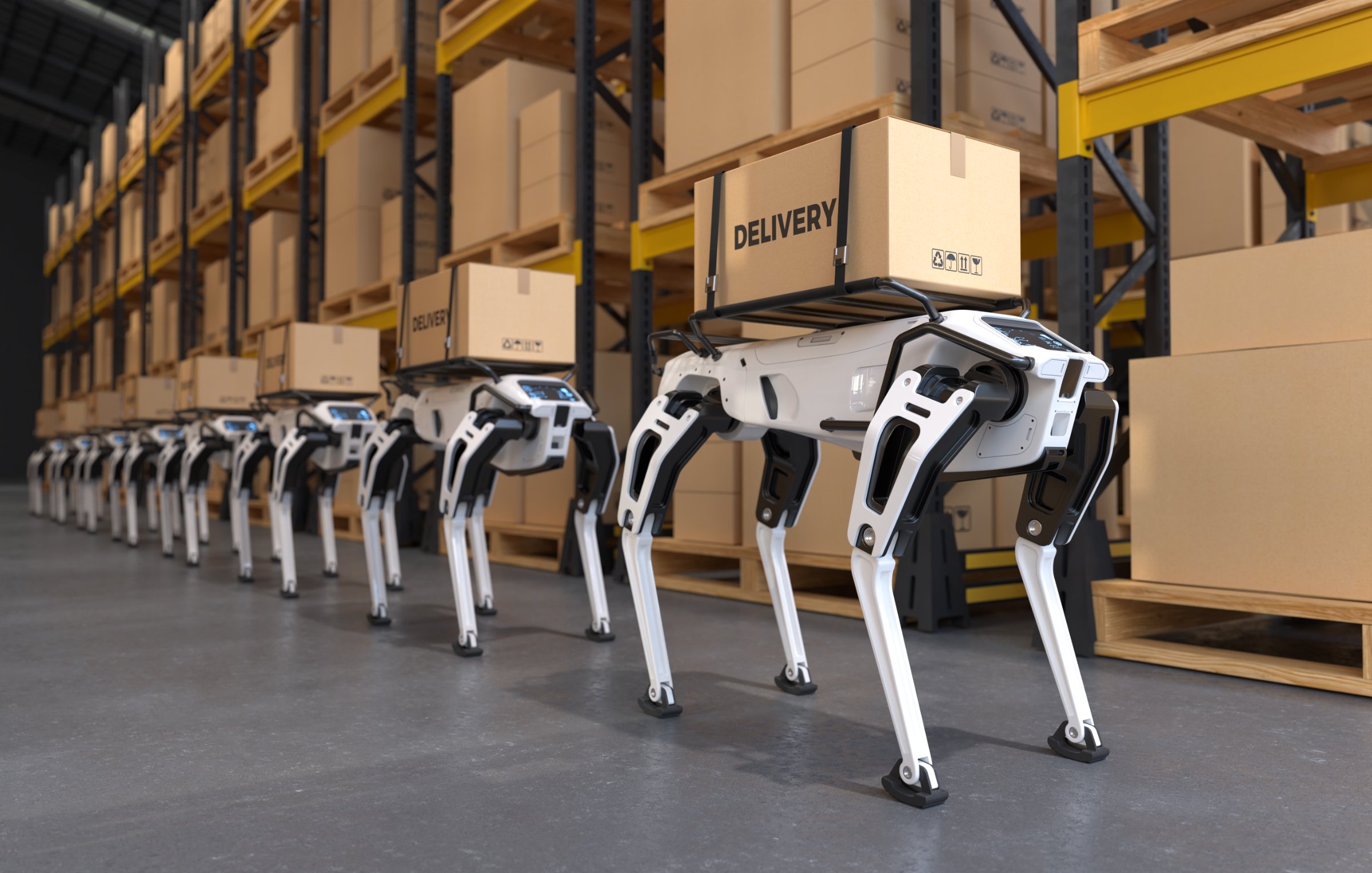
Warehouse AI Hits $127 Billion by 2035 with Amazon leading the way: What that means for Logistics operators.
The AI-in-warehousing market is on track to hit $127.66 billion by 2035, and Amazon's robot fleet shows where it is headed. The pitch to workers is that this wave was built to help them. What it actually means for the floor is a choice most operators still haven't made.

Signed, Sealed, Delivered: Amazon Is Coming for UPS and FedEx's Parcels
Amazon opened its logistics empire to any business on May 4, and UPS and FedEx shares fell within hours. The rate war everyone saw coming is here. But parcel contracts are won on price and kept on the sort floor, and the carriers under attack are betting on their people, not their rates.