
From Automation to AI Augmentation: Why Fedex’s AI Training Bet Signals a Frontline Reset


The Frontline Factor — Supply chain competitiveness is no longer determined solely by how much an organization has automated. Every serious player will have access to the technology. The differentiator will be how effectively frontline teams are equipped to work alongside it.
The AI automation shift isn't about replacing workers. It's about resetting operational expectations
FedEx is rolling out role-based AI training to hundreds of thousands of frontline employees, and the strategic intent is clear. The companies that will define the next phase of supply chain performance aren't necessarily the ones with the most automation.
They're the ones building the workforce capability to run it effectively.
This reflects a broader recalibration underway across logistics that most organizations haven't fully acted on yet.
Automation of labor led to more complexity, not less
The automation-first era assumed the labor problem would eventually solve itself. It didn't. Operations grew more complex. Exceptions multiplied.
And billions of dollars in technology investment began disappearing into an execution gap with the distance between what systems can do and what frontline teams are equipped to deliver.
Closing that gap has become a defining operational challenge for logistics leaders in supply chain.
A premise that no longer holds: fuzzy logistics
For the better part of a decade, supply chain leaders operated on a straightforward premise: automate enough, and the need for frontline labor diminishes.
Fewer people. Lower costs. Cleaner operations.
These assumptions are still shaping short-sighted strategy today.
Supply chain leaders borrowed their automation logic from manufacturing, where headcount reduction at scale actually worked, at least for a while. But distribution is messier, and that math never fully transferred. Labor got framed as a cost problem rather than a capability, which made workforce investment look like overhead.
The industry then chased Amazon's automation model without replicating what mattered most: Amazon recently committed $1.2 billion in 2025 to upskill over 700,000 employees alongside its robotics rollout, an acknowledgment perhaps that automation of infrastructure without appropriate training isn't a viable long-term strategy.
For others without that level of investment, the automation is visible. The workforce infrastructure behind it often isn't.
Deal with it: fulfillment and logistics has fundamentally changed
In warehouses, fulfillment centers, and logistics hubs, frontline work looks different than it did five years ago.
AI systems handle routing. Autonomous mobile robots move inventory. Smart systems optimize picking, packing, and dispatching in real time. But these systems don't eliminate frontline work. They redistribute it.
The numbers reflect how fast the restructuring is moving. UPS is cutting 48,000 jobs through 2026. More than 3,000 freight and manufacturing roles were eliminated in January alone.
Automation is part of that story, but so is excess capacity, contract losses, and network consolidation. The organizations navigating this well aren't just reducing headcount. They're rebuilding capability around the technology they've deployed.
Frontline employees are now responsible for managing exceptions when automated systems fail, interpreting real-time data and adjusting workflows on the fly, coordinating between human teams and machine systems, and maintaining uptime across increasingly complex environments. The frontline role is no longer primarily task-based.
And judgment at that level requires a fundamentally different kind of workforce preparation.
The execution gap some logistics companies are ignoring
Walk into most modern distribution centers and the pattern is consistent: extraordinary technology operating at ordinary performance levels.
Augmented reality systems guide workers through complex processes. AI tools improve inventory accuracy. Autonomous robots navigate floors built for humans. Real-time dashboards surface data that rarely gets acted on.
The tools work. The adoption doesn't.
Frontline teams are being asked to operate systems they were never trained to use, in environments that change faster than any static onboarding program was built for.
The result is predictable: tools get underutilized, automation doesn't get fully trusted, and the productivity gains that justified the capital investment fail to materialize.
Before fingers are pointed at the the technology stack, this is not a technology problem more so than it is a workforce readiness problem.
And it is one the industry has been slow to confront directly.
What FedEx's investment in AI signals
Role-based AI training at the scale FedEx is attempting is an operational performance strategy that directly acknowledges how system capability has outrun workforce capability, and that closing that gap is now a core business priority.
The organizations investing in frontline upskilling are seeing measurable returns: faster technology adoption, higher system utilization, sharper decision-making at the edge, and stronger employee retention. There is a less obvious benefit as well.
As frontline roles evolve beyond repetitive execution toward active problem-solving, job satisfaction tends to improve which is important in a labor market that remains competitive.
The augmented worker model: collaborative and augmented
The most effective supply chain operations are not fully automated. They are collaborative.AI handles prediction. Automation handles repetition.
Humans handle judgment.
That means interfaces built for high-pressure operational environments, not dashboards optimized for executive reporting. Training that is continuous rather than a one-time onboarding event. Systems that support decision-making at the point of execution, not just surface data that workers don't have time to interpret.
In short, the technology and the human experience of using it have to be designed together; not sequentially.
The Frontline Take
Supply chain competitiveness is no longer determined solely by how much an organization has automated. Every serious player will have access to the technology. The differentiator will be how effectively frontline teams are equipped to work alongside it.
FedEx's investment is a clear signal that leading organizations are treating workforce capability as a primary concern: not a secondary consideration.
For HR and operations leaders watching from the outside, the more pressing question is whether their own workforce strategy is keeping pace with the technology stack they've already deployed.
Key Takeaway
The companies that win the next phase of supply chain competition won't be the ones that deployed the most automation. They'll be the ones that built the most capable teams to run it.

Related Articles
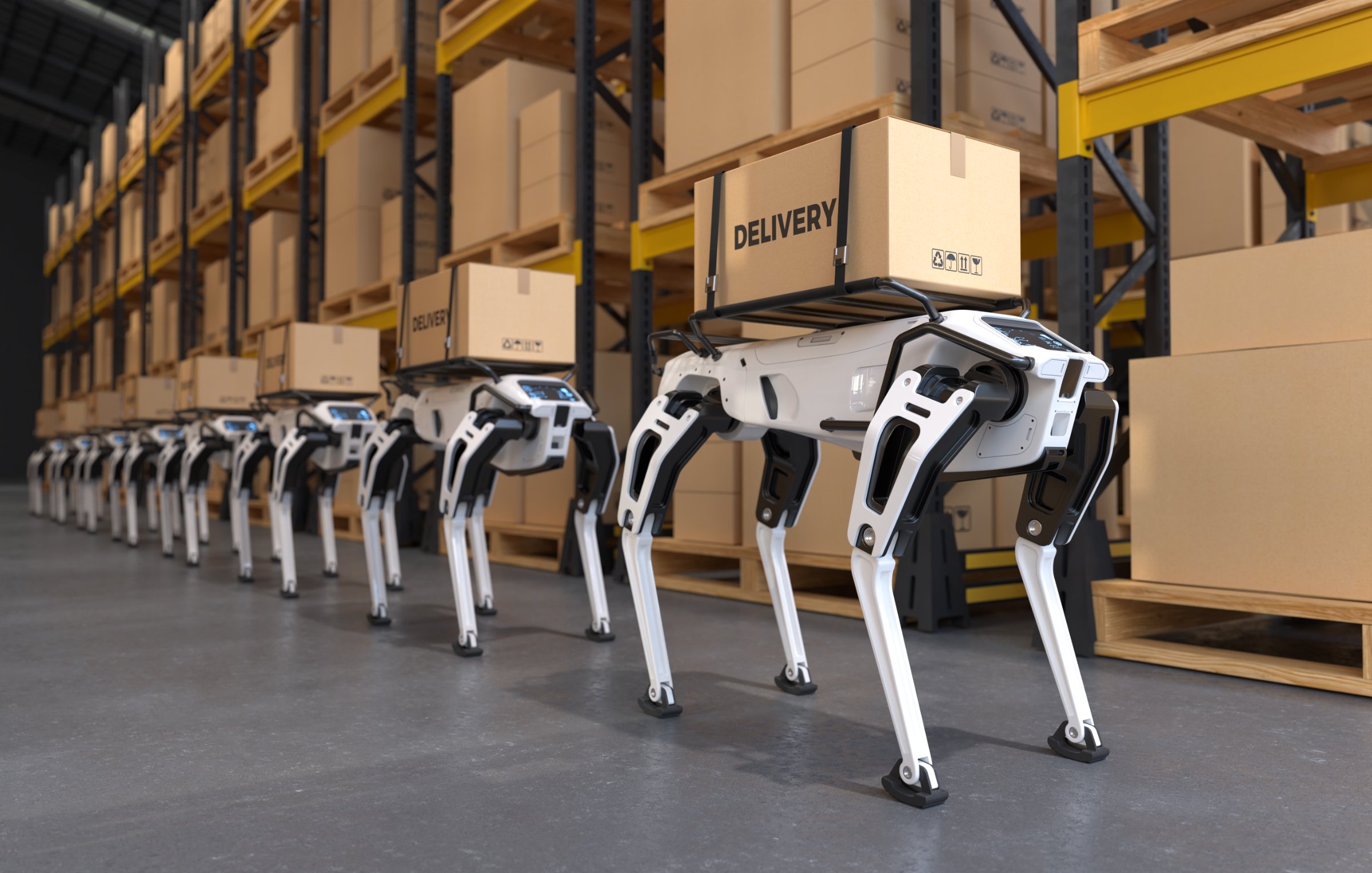
Warehouse AI Hits $127 Billion by 2035 with Amazon leading the way: What that means for Logistics operators.
The AI-in-warehousing market is on track to hit $127.66 billion by 2035, and Amazon's robot fleet shows where it is headed. The pitch to workers is that this wave was built to help them. What it actually means for the floor is a choice most operators still haven't made.

Signed, Sealed, Delivered: Amazon Is Coming for UPS and FedEx's Parcels
Amazon opened its logistics empire to any business on May 4, and UPS and FedEx shares fell within hours. The rate war everyone saw coming is here. But parcel contracts are won on price and kept on the sort floor, and the carriers under attack are betting on their people, not their rates.
Warehouse Leadership in the Age of Same-Day Delivery
Warehousing is now a real-time fulfillment engine. Same-day delivery expectations are transforming operations and cranking up the pressure for warehouse leaders.