
Returns, Refunds, and Retail Rage. Hold the Frontline.


The Frontline Factor — Returns, refunds, and rage. From January 2027, large New York retailers must install silent response buttons. The law handles the incident. It does nothing about the slow version, the ordinary Tuesday that quietly returns a different person to their family.
On January 1, 2027, retailers with 500 or more retail employees in New York State will have to put silent response buttons in their stores.
That deadline sits at the end of a longer runway.
Since June 2025, the state's Retail Worker Safety Act has required any employer with 10 or more retail employees to adopt a workplace violence prevention policy and train people on it. California got there earlier and broader, with Labor Code section 6401.9 requiring covered employers to maintain a written workplace violence prevention plan since July 2024.
These laws address the moment things go wrong. The law handles the incident, but ignores the lasting impact on your people.
Shift happens: the case for compliance is real
Nobody serious argues against this. Retail workers get threatened and assaulted, and a standard that says so out loud is overdue. Most operators are complying in good faith, not grudgingly.
Compliance is also legible. A policy exists or it does not. A button is installed or it is not.
Training completion is a number you can put in a board pack. For an operator running hundreds of sites on a thin labor budget, legible is worth a great deal.
HR leaders and team leads must align on how these plans are executed on the floor. Safety compliance can't be a mere checkbox; it must address the root causes of incidents.
Rage against the return: minimize employee harm by customers
In a February 2025 survey of 500 U. S. frontline workers across retail, hospitality and food service, Axonify found that 99% had experienced customer incivility in the past year. Nearly all of them.
None of that is a 911 call. It is a customer who decides the queue is your associate's fault.
Where it goes next is well documented.
Bad customer behavior can lead to bad employee behavior
In a study of frontline employees at U. S. full-service restaurants, experienced customer incivility was associated with higher emotional job demands and burnout, and burnout in turn predicted employees' own incivility toward customers and toward coworkers.
The rudeness does not stop with the person who absorbs it. It moves beyond the shift, into the associates personal life.
Read what retail workers write in anonymous forums and a blunter version of the same account keeps surfacing. Fatigue is rarely the word they reach for. They describe becoming harder than they used to be, around strangers, on days off, years after leaving the job.
Some say they hope it wears off. They do not sound sure.
That is the part that should land for an operator. You are not only spending someone's patience for the day. Over a long enough run you are changing who they are.
Customer abuse laws help, but operators must understand daily customer abuse changes staff long after their shifts. Lead with compassion and support your people.
The causes are sitting on your schedule
Workers in the Axonify survey named what drives the behavior they face. Rising prices topped the list at 81%. Understaffing came next at 79%, followed by customer-facing policies that leave shoppers feeling entitled, at 75%.
Pricing may be out of your hands. The other two are not.
That is an uncomfortable place to stand. The standard response is aimed at the wrong end of the problem. Teaching an associate to de-escalate an angry queue is useful work, but it also asks the person with the least control in the building to absorb a consequence of how the building is run.
The reporting layer is not doing much better. In research commissioned by Halos, a body-worn camera vendor, and conducted by 3Gem in April 2026 among 1,500 U.
S. frontline workers, only 55% agreed that reporting abuse leads to meaningful action. More than a third said their employer treats customer aggression as "just part of the job."
Read that next to your engagement scores.
Ask people about their team and their manager and the numbers often come back fine, because the team usually is fine. The corrosive exposure sits at the customer interface, and standard survey instruments do not have a question pointed at it.
What separates the operators who handle this successfully
Back the associate while the customer is still standing there. Reversing a decision in front of an angry shopper teaches everyone watching, staff included, what the store actually rewards.
Give them a line they are allowed to hold. An associate who cannot say no without escalating to a manager has no protection, only a script.
Every report needs a visible answer. A report that disappears trains people not to file the next one, which is how a problem stops appearing in your data while continuing to happen.
Put the hours where the friction is. Understaffing is not only a service failure. Many operators observe that understaffing is the condition that produces most of the incivility your people are being trained to survive.
The Frontline Take
Buttons and policies handle most incidents from a checkbox perspective. However humans aren't checkboxes, and they need line managers that will help them hold the line against rude and aggressive customers professionally AND safely.
You can never make all customers happy, but you can set boundaries around what acceptable behavior is so that your team want to come back day after day feeling supported.
Key Takeaway
Customer abuse laws and compliance checklists are helpful, but operators needs to understand that daily customer abuse changes who your people are long after they leave. Lead with compassion and hold the line for them.
Related Articles

The Cost of Inconsistency: How Poor Scheduling Drives Up Retail Turnover
Chicago's revised Fair Workweek rules took effect June 1, 2026, and most retailers are reading the news as a compliance map. The costlier question is where schedule instability actually comes from, and how it affects retail turnover.
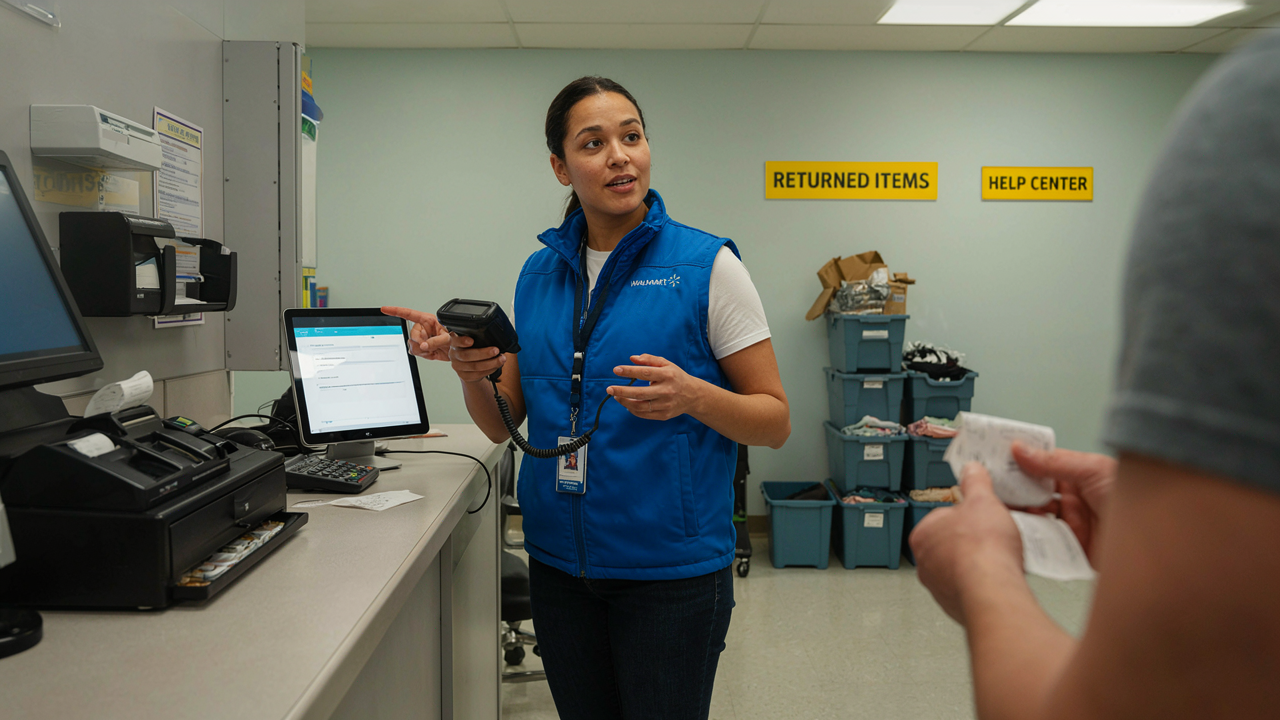
Store workers at Walmart have a new responsibility: correcting AI errors.
Walmart store workers are now correcting the AI agents that assign their tasks and set timings they can't hit. Managers say they are not enforcing those numbers. That restraint is the only safeguard in the system, and it is not written down anywhere.

Steaks are High on the Frontline: Customers can't afford groceries
This summer, meat eaters are feeling the pinch as the cost of goods and services continue to command a premium of their pockets. As a result, many are skipping out on their favorite lamb shank, or steak. The question is: how does this affect the way operators price, organize and promote meat items?