
Here Comes the Smoke: How Wildfires Affect the Frontline.
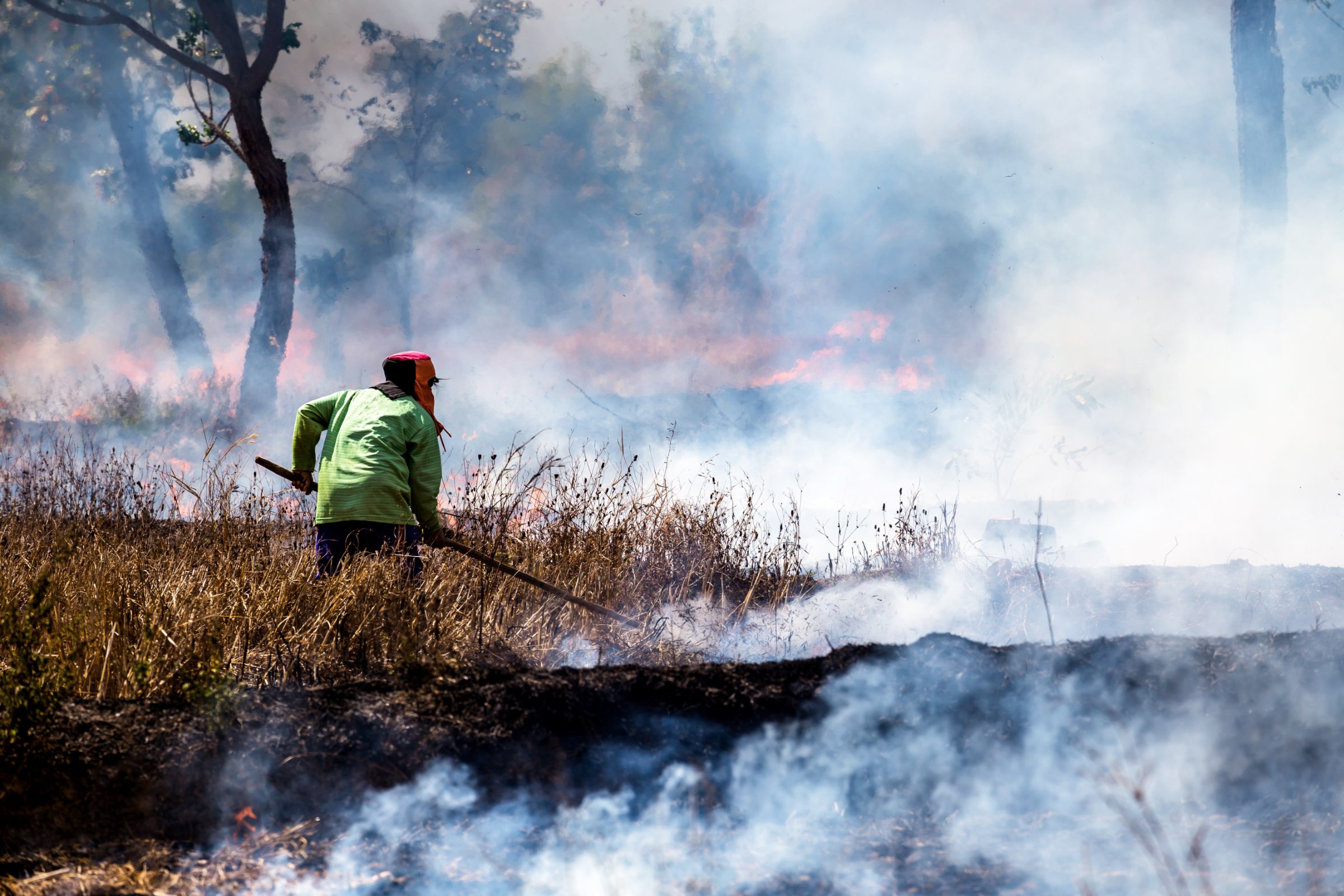

The Frontline Factor — A rail crew in northern Ontario filmed flames closing in around their halted train this week. Days later, smoke covered workers from Minnesota to New York. Most frontline employers have a plan for a blizzard. Almost none have a plan for the air itself.
This week, a rail crew in northern Ontario filmed the view from their halted train as a wildfire closed in around the tracks near Armstrong. "We're encased in flames now," one crew member said. Everyone made it out safely.
While the fires are primarily a northern Ontario story, workforce exposure is not. Within 48 hours of that video, smoke had pushed air quality warnings from Minnesota through Toronto and into New York, settling over millions of frontline workers who will never see a flame.
Most of their employers have a plan for a blizzard. Very few have a plan for this.
The exposure is continental
As of Tuesday evening, 185 wildland fires were burning across northern Ontario, forcing several First Nations communities to evacuate, destroying homes in Namaygoosisagagun First Nation, and closing sections of two highways. Ontario has recorded 453 fires so far this year, against 349 at this point last year and a 10-year average of 312.
The operational footprint runs far beyond the fire region. On July 15, wildfire smoke pushed Toronto's air quality to a ranking of worst in the world, and it arrived during a heat warning.
Environment Canada's guidance was blunt: "During heavy smoke conditions, everyone's health is at risk regardless of their age or health status. Limit time outdoors." Several Ontario regions were forecast at 10+ on the Air Quality Health Index, the highest risk level the scale has.
South of the border, the Associated Press reported unhealthy air warnings stretching from Minnesota through Toronto and into New York, with the densest smoke expected to reach as far as Washington, D.C.
Minnesota officials warned their fires could keep burning until snow falls.
This is not an event with a start time and an end time. It is a season.
Why the standard playbook fails
Existing severe-weather protocols, built for snow, floods, and hurricanes, don't account for smoke.
Smoke has no perimeter. A hurricane plan activates for stores in the storm's path. Smoke from a fire 1,000 kilometres away can degrade the air in any risk model. The Toronto workers breathing the worst air in the world on Tuesday were nowhere near a fire.
It punishes the jobs you cannot move indoors. Curbside pickup, yard and dock work, delivery routes, garden centers, roadside crews, outdoor line queues at attractions. Fine particulate matter from wildfire smoke can cause serious respiratory harm with even short-term exposure, and this week it arrived paired with extreme heat.
Each hazard makes the standard mitigation for the other one worse. You cool a stockroom by opening doors. Not this week.
The duty already sits with the employer. Canadian Occupational Safety notes that employers carry their own legal obligation to assess wildfire-related risks, communicate hazard information to workers, and adapt work plans when conditions deteriorate. Waiting for a regulator to force the issue is not a strategy.
In several jurisdictions the guidance has already been strengthened, and federal forecasters said in May that fire danger would build through July, with British Columbia facing the most sustained risk in the country. The warning came weeks before the smoke did.
This duty demands proactive solutions, leading to the question: What truly separates the operators who handle this well?
Hourly workers hear about it last. Office employees get told to work from home. The associate scheduled for a 6 a.m. dock shift often gets no message at all, and finds out what the air is like when they step into it.
What separates the operators who handle this well
A numeric trigger, decided in advance. The organizations that manage smoke well treat the Air Quality Health Index the way they treat a wind-chill cutoff: a published threshold at which outdoor tasks get shortened, rotated, moved, or stopped. Nobody on the floor should be improvising that call at 6 a.m.
Task redesign before shift cancellation. Most smoke days do not require closing anything. They require moving the outdoor work: shifting curbside staffing indoors, resequencing yard work to cleaner hours, tightening rotation intervals, making N95s available for tasks that cannot move.
That takes a manager who has been given options, not only a warning.
Communication that reaches the floor. A smoke protocol that lives in an intranet PDF does not protect anyone. The measure of readiness is how fast a change in air quality becomes a change in what a specific worker is doing at a specific site, including workers without a company email address.
Season-length planning. If the fires burn until snow, this cycle repeats every time the wind shifts. Treating each smoke day as a surprise burns out managers and erodes trust. Building the trigger, the task options, and the communication path once means the tenth smoke day costs almost nothing.
The Frontline Take
The rail crew near Armstrong got out safely. The video they left behind shows what this season looks like from the frontline: workers absorbing the gap between what their employers planned for and what actually arrived.
Smoke has become a recurring operating condition across the continent landing hardest on the people with the least flexibility in where they stand for eight hours, and the legal duty to manage it already belongs to the employer.
The organizations that come out of this season with their workforce's trust intact will be the ones that decided, before the wind shifted, exactly what changes on a bad-air day and who gets told first.
Everyone else is gambling with their workforce's health and trust.
Key Takeaway
Wildfire smoke is now a season-long operating condition, and the frontline employers who manage the fallout best will be those with an air-quality trigger decided before the wind shifts.
Related Articles

Robotics ROI: the Human Metrics Your CFO Isn't Tracking
A recent study by Deloitte found that over 60% of manufacturing executives believe that automation and robotics will significantly impact their workforce within the next five years, yet only 42% feel adequately prepared to manage these changes.

Workforce Management Has a Definition Problem. What Is It?
Every glossary agrees on what workforce management means. Then a popular retail franchisee ran the textbook version and paid more than $1.8m. The standard definition optimizes the employer's ledger and ignores the half workers experience. This is the definition that predicts whether WFM works.

What AI Can't Fix: The Human Factors Still Driving Frontline Failure
AI tools won't save a broken frontline culture. Trust, clarity, and psychological safety determine whether your AI investment pays off — or just automates dysfunction. As a HR or Operations Leader, which path you choose will set the tone for the success or failure of your people.