
Machines Aren’t the Constraint, the Manufacturing Labor Shortage Is.
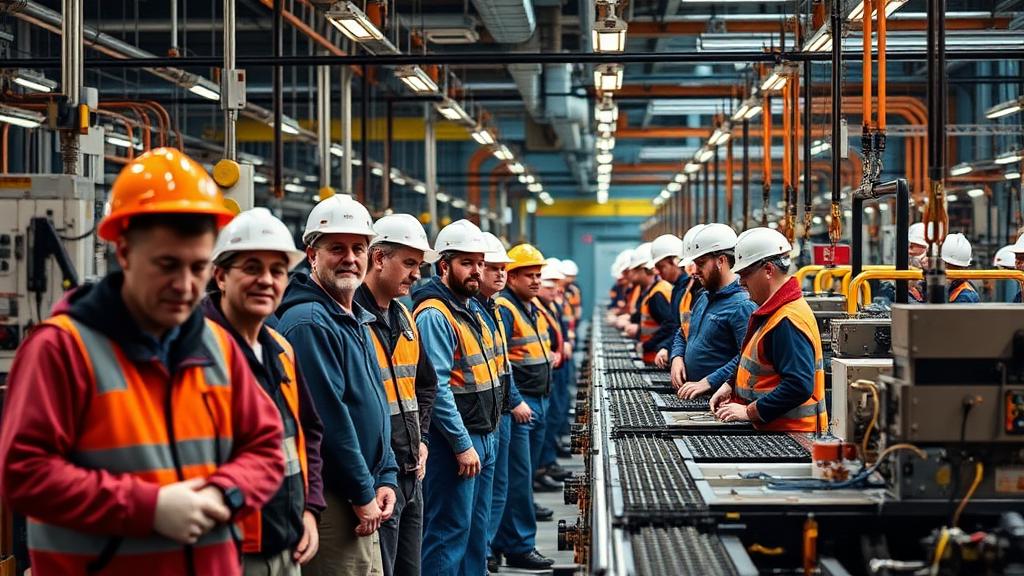

The Frontline Factor — U.S. manufacturing output is experiencing a boom in the early part of 2026, with the Purchasing Managers' Index (PMI) consistently signaling growth and new orders on the rise. But will shortages in labor block this growth?
U.S. manufacturing is experiencing a boom in the early half of 2026, with the Purchasing Managers' Index (PMI) consistently signaling growth and new orders on the rise.
Yet, despite this, a crisis is brewing on the factory floor: an escalating shortage of skilled labor that threatens to become an unyielding operational ceiling for workforce managers.
This is a fundamental capacity constraint, limiting what manufacturers can truly produce.
Orders are climbing: so why does it feel tight?
The latest PMI figures, while indicating robust manufacturing activity, mask a critical vulnerability.
As orders swell and the imperative to scale production intensifies, operations leaders are increasingly confronted with a sobering reality: the availability of skilled hands, not just advanced machinery, dictates their true output capacity.
Research, such as the 2021 Deloitte and The Manufacturing Institute study, indicates that by 2026, this labor shortage is projected to become an "operational ceiling," limiting throughput, delaying deliveries, and ultimately preventing companies from capitalizing on market demand.
Industry projections are stark.
The manufacturing sector could see up to 2.1 million jobs go unfilled by 2030, out of 4 million jobs that will need to be filled, if current trends continue. Hundreds of thousands of critical roles are open right now.
Critically, recent surveys by organizations like the National Association of Manufacturers (NAM) consistently show that a high percentage of manufacturing executives, often in the 70-80% range, identify skilled labor shortages as a top business challenge, highlighting widespread recognition of the problem at the highest levels.
This disconnect between expanding activity and stagnant employment creates an acute operational risk that forward-thinking COOs and VPs of Operations must address with urgency.
If overtime is the plan, you don’t have a plan
For many operations managers, managing overtime is a daily balancing act. Fluctuations are common, reflecting shifts in demand, unexpected breakdowns, or project deadlines.
However, a continuous, elevated level of overtime, even when seemingly stabilized, should be viewed as a canary in the coal mine, signaling deeper structural workforce challenges rather than just temporary needs.
When overtime becomes the default mechanism for meeting production targets, it indicates an underlying deficit in available, skilled labor.
This "stabilized" overtime merely papers over the cracks, allowing organizations to maintain output in the short term, but at a significant cost:
Operations leaders must integrate overtime data into their strategic workforce planning.
Tracking overtime trends, correlating them with production output and quality metrics, provides invaluable insights into where labor deficiencies are most acute and where long-term solutions are desperately needed.
Institutional memory is leaving the building
The modern manufacturing plant is a complex ecosystem, and its functionality often hinges on the specialized knowledge of a relatively small number of highly experienced individuals.
These experts possess deep institutional memory, niche technical skills, and practical problem-solving capabilities honed over decades.
While invaluable, this concentration of knowledge presents a significant operational fragility, especially in light of impending demographic shifts.
The manufacturing sector faces a substantial wave of retirements in the coming years, a trend highlighted by a Bureau of Labor Statistics report on an aging workforce, meaning that critical, often undocumented, expertise will walk out the door. The implications are severe:
- Increased downtime: When a highly skilled individual is absent, for whatever reason, the ability to diagnose and fix complex machinery or processes can be severely hampered, leading to prolonged downtime.
- Reduced problem-solving capacity: Relying on a few individuals for all complex issues creates bottlenecks and delays in resolving critical operational challenges.
- Higher training burden: The sudden departure of multiple experts simultaneously can overwhelm training capabilities and prolong the time it takes for new hires to reach full productivity.
Mitigating knowledge concentration risk requires a proactive approach that goes beyond simply hiring new workers. It demands a systematic effort to identify, document, and transfer critical knowledge across the workforce, fostering a culture of continuous learning and skill dissemination.
The cost of reactive supervision
The escalating labor shortage cascades down to the supervisory level, fundamentally altering their role. Instead of focusing on proactive coaching, skill development, and fostering a high-performance culture, frontline supervisors are increasingly forced into a perpetual "firefighting" mode.
They fill in for absent workers, troubleshoot immediate production issues, and manage the constant churn of understaffed shifts. This shift has detrimental consequences for operational consistency and long-term team development:
- Reduced employee development: Supervisors lack the time and bandwidth to effectively train new hires, mentor developing talent, or provide ongoing performance management.
- Burnout at the supervisory level: The relentless pressure to maintain output with limited resources takes a heavy toll on supervisors, leading to stress, high turnover among this critical group, and a further erosion of institutional knowledge.
- Lack of standardized processes: When supervisors are constantly reactive, the enforcement of standard operating procedures (SOPs) often falls by the wayside, creating inconsistencies and increasing the risk of errors.
Empowering supervisors to be effective leaders requires addressing the underlying labor shortfalls and providing them with the tools and support to move from reactive crisis management to proactive team development and operational excellence.
Build manufacturing bench strength before you need it
Addressing the manufacturing labor shortage as a fundamental capacity constraint requires a disciplined, strategic approach to workforce planning. This is not an HR function alone; it is a critical operational imperative.
Operations leaders need visibility into skills, not just headcount. Map the exact technical and operational capabilities each role requires. Assess current strengths and gaps. Identify where critical knowledge sits with only one or two individuals. This turns hidden risk into something measurable.
Build depth instead of relying on single replacements. Cross-train for critical roles. Develop internal talent pipelines. Prioritize positions that directly affect production, quality, and safety. The goal is coverage and continuity so output does not depend on one expert.
Modernize how knowledge moves across the plant. Digitize SOPs. Use clear visual work instructions. Enable real-time communication across shifts. Track overtime by shift, task, and department to identify structural gaps early and forecast staffing needs before they constrain throughput.
The Frontline Take
The current manufacturing boom is simultaneously illuminating a critical fault line: our reliance on a diminishing pool of skilled labor. This is no longer merely an HR challenge; it is a core operational constraint, directly impacting capacity, throughput, and profitability.
Operations leaders must recognize that the machines are only as productive as the people who operate and maintain them and that increased output isn't necessarily a leading indicator, but a lagging one of constrained capacity due to labor shortages.
Key Takeaway
The manufacturing labor shortage is changing from a recruitment issue into an operatonal capacity problem.

Related Articles

Do it Yourself, Frontline: Why AI Self-service is the Future of HR Support
Manufacturers in 2026 are increasingly adopting AI-self-service chatbots to help with routine HR queries. Is this a good thing, and how do leaders embrace this shift while keeping the human in HR?

Energy Volatility and Tribal Knowledge: the Hidden Risk in Your Manufacturing Production Line
When energy markets turn volatile due to international conflict, manufacturers reach for leaner operations and tighter margins. But the risk that tends to bite hardest isn't on the energy desk: it's standing at the machine.

Managing technical debt in manufacturing before it manages you
When experienced operators leave, they take decades of tribal knowledge with them. Here's how to diagnose and fix the technical debt they leave behind, before it disrupts your production floor.