
Energy Volatility and Tribal Knowledge: The Hidden Risk in Your Manufacturing Production Line


The Frontline Factor — When energy markets turn volatile due to international conflict, manufacturers reach for leaner operations and tighter margins. But the risk that tends to bite hardest isn't on the energy desk: it's standing at the machine.
Since 28 February 2026 until the start of April, the Strait of Hormuz has been effectively closed, taking roughly a fifth of the world's oil supply offline. It has only recently opened after an interim ceasefire was called (please note this is a dynamically changing situation).
Brent crude prices are currently significantly lower than $120 a barrel, typically fluctuating in the range of $80-$97.77 per barrel as of 9:08PM ET on Wednesday April 8th 2026. The International Energy Agency (IEA) has not declared the current energy situation as the greatest global energy security challenge in history but it has expressed concerns about the current fuel crisis.
Manufacturing feels the financial bite
Manufacturing finance teams are running cost models they hoped they'd never have to action. Against that backdrop, picture a Monday morning, midway through a run. The plant manager needs to adjust the energy profile of a critical process.
A subtle change, but one that requires precise knowledge of how a particular line behaves under reduced load and an extended time of austerity.
The manual doesn't cover it and the situation is uncertain.
The scenario no one plans for: uncertain energy markets
This is not a hypothetical. Versions of it have been playing out in manufacturing facilities every week. And as energy market pressure intensifies, driven by geopolitical instability, commodity volatility, and the ongoing transition away from fixed-price supply contracts: scenarios like this are becoming both more frequent and more costly.
What makes them so difficult to anticipate is that the risk has nothing to do with energy at all. It sits inside the organisation, in the undocumented expertise of a small number of experienced workers. The energy market supplies the pressure. The knowledge gap determines whether the plant holds.
The manufacturing debt that doesn't appear on any balance sheet
Manufacturing has borrowed heavily from software development's vocabulary in recent years, and one term translates almost perfectly: knowledge debt.
Just as technical debt accumulates when development teams take shortcuts that work in the short term but create fragility over time, knowledge debt builds whenever critical operational know-how is not formally captured, shared, or embedded into standard practice.
Instead it lives in people; in the hands of a machine operator who has learned to listen for a particular sound before adjusting the feed rate, in the memory of a maintenance specialist who knows which supplier to call before logging a formal ticket, in the instinct of a shift supervisor who recognises an anomaly three steps before it becomes a fault. In the operational roadmap of an operations leader that is filed away on their personal computer.
Knowledge accumulates organically, and in stable conditions it flows naturally from senior workers to junior ones through proximity and repetition. The problem is that modern manufacturing is rarely stable, and the conditions that once allowed that informal transfer, consistent shift patterns, low turnover, long tenures, have eroded significantly across the sector.
What was once an organic feature of an experienced workforce has become a liability with a very specific trigger: any moment when the person who knows is not the person who needs to act.
Mixing oil with energy disruption fuels knowledge debt
Energy volatility and knowledge debt interact badly. The link is not obvious at first, but it becomes clear when you consider what energy disruption actually demands of a production facility: rapid decisions on maintenance and conservation, non-standard interventions, and adaptations to process that sit outside the routine.
A sudden change in energy tariffs may require a plant to shift its heaviest consumption out of peak hours. That sounds straightforward until you discover that the people who know how to sequence that shift without affecting product quality are concentrated in one shift team.
An unplanned power interruption may require a manual override of automated controls. Without documented procedures and staff trained to execute them, that intervention depends entirely on one person being present and calm under pressure.
Inefficiencies caused by suboptimal process knowledge during an energy cost spike translate directly into margin. Unresolved issues that an experienced operator would have handled in twenty minutes can become multi-hour stoppages when the knowledge isn't transferable. And the safety implications of improvised procedures during critical interventions are serious in any facility where energy management intersects with physical risk.
What manufacturing leaders need to do before an energy crisis becomes an operational one
The starting point for any manufacturing leader serious about this is an honest knowledge dependency audit. An operational risk assessment that asks a single blunt question: if this person were not here tomorrow, what could we not do?
That question should be applied to the ten or fifteen most critical and energy-sensitive processes in a facility. For each one, the task is to identify who holds knowledge that is not formally documented and not widely shared, and to be specific about what that knowledge actually is.
Workarounds, troubleshooting sequences, informal supplier contacts, undocumented parameter adjustments, these are the liabilities. Naming them is the first step to managing them.
The output of that audit should drive three practical responses.
First, structured knowledge capture: digital work instructions, short video guides recorded by the people who actually do the work, and shift handover forms that require a genuine transfer of operational status rather than a signature on a clipboard.
Second, cross-training with teeth. not the nominal kind where two people have technically been shown a process, but a deliberate programme that ensures at least two or three people can execute each critical task independently and under pressure.
Third, the "what if" discipline: regular, scenario-based exercises that ask teams to work through how the plant would respond to a sudden energy price spike or supply cut, with the specific goal of surfacing knowledge gaps before a real event forces them into the open.
Culture over manufacturing process, but don't forget both
None of this holds together without a shift in how knowledge sharing is valued. In many facilities, documentation is still treated as administrative overhead, something that happens after the real work, if it happens at all. Experienced workers are not always motivated to share what they know, particularly if their expertise is tied to their standing on the floor.
Changing that requires leaders to make the case plainly and repeatedly: undocumented knowledge is not an asset, it is a risk held in a single location that can't manage rapid global crises leading to reduced operation, increased inefficiency, and burnout.
The goal is not to diminish the expertise of experienced workers but to protect its value, ensuring that what they know survives shift changes, retirements, and unexpected absences.
Where organisations have built this into performance expectations, treated knowledge champions as a recognised role rather than an informal arrangement, and invested in tools that make capture genuinely easy for frontline workers, the culture tends to follow.
The Frontline Take
Regardless of climate change, global conflict, or decreasing resources, the current energy environment is widely projected to remain volatile and unpredictable, as noted by various energy market analysts and organizations like the International Energy Agency.
Manufacturers who build operational resilience only around supply contracts and hedging strategies will find themselves exposed the moment a non-standard situation demands something that isn't written down and accounted for.
The facilities that weather volatility best will be those that have turned their frontline expertise into something the whole organisation can access, at the right time.
Key Takeaway
Unchecked 'knowledge debt,' especially in critical, energy-sensitive operations, poses a compound threat when combined with global energy volatility, turning what was once an asset into a single point of failure that can cripple production.
Related Articles
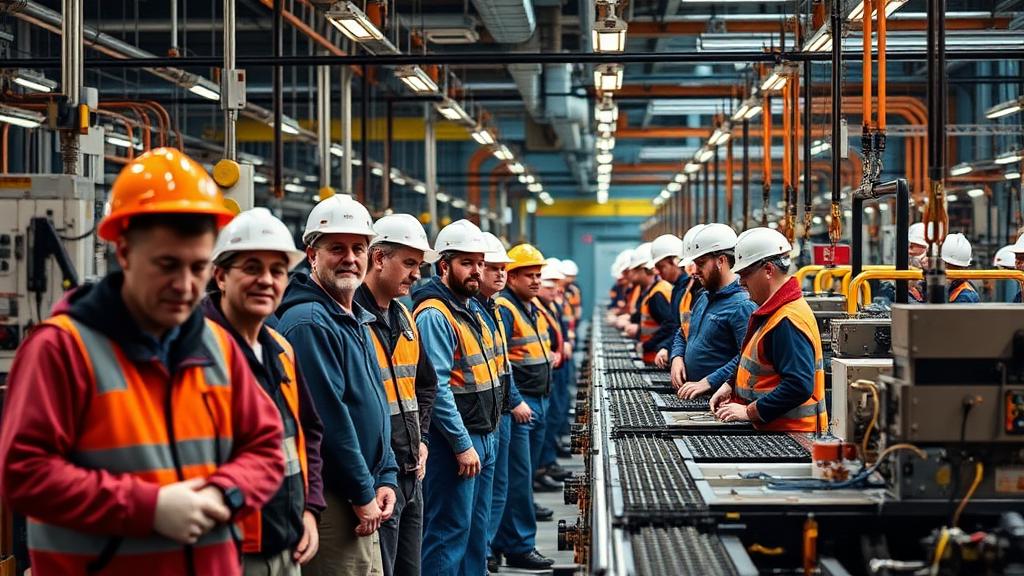
Machines Aren’t the Constraint, the Manufacturing Labor Shortage Is.
U.S. manufacturing output is experiencing a boom in the early part of 2026, with the Purchasing Managers' Index (PMI) consistently signaling growth and new orders on the rise. But will shortages in labor block this growth?

Do it Yourself, Frontline: Why AI Self-service is the Future of HR Support
Manufacturers in 2026 are increasingly adopting AI-self-service chatbots to help with routine HR queries. Is this a good thing, and how do leaders embrace this shift while keeping the human in HR?
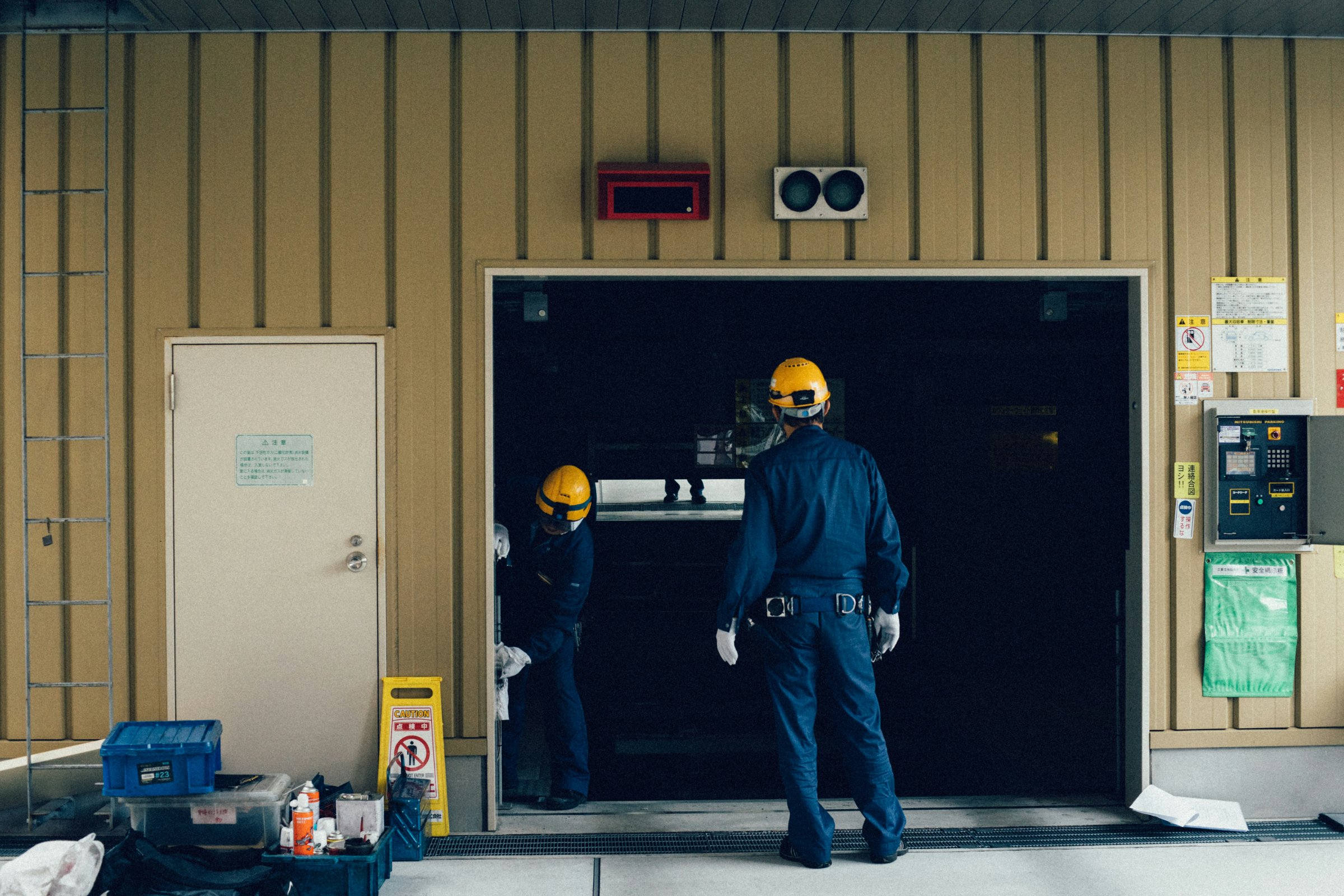
Managing technical debt in manufacturing before it manages you
When experienced operators leave, they take decades of tribal knowledge with them. Here's how to diagnose and fix the technical debt they leave behind, before it disrupts your production floor.