
The Compliance Trap: Safety Theater is Killing Engagement in Manufacturing


The Frontline Factor — Are you tickboxing safety compliance? When safety programs become checkbox exercises, employee engagement suffers. Learn how leading companies are moving beyond performative compliance to build cultures where workers actively protect each other.
Safety theater is not safety
In early June, OSHA fined H-E-B nearly $18,000 after Teresa Dominguez died of blunt trauma while working in the grocer's San Antonio warehouse.
The citation deserves a close read. OSHA classified as "serious" the company's failure to reevaluate 30 employees on forklift operation within the required three-year window, and cited disrepaired, unguarded walking hazards at multiple locations. It was the second death at that warehouse in a matter of months. The training program existed. The signature sheets presumably existed too.
What was missing was the thing the paperwork was supposed to represent.
Every frontline operation runs some version of the ritual: the annual video on loop and the sign-off sheet circulated like a permission slip. Somewhere nearby on the production floor, a laminated poster announces "Safety First." The question underneath is harder than it looks. Is the program built to protect workers, or to produce evidence that someone tried?
Compliance that performs instead of protects
Safety theater is the name for activity that prioritizes the appearance of safety over the reduction of risk. It is the gap between teaching a worker to recognize the hazards on their actual floor and having them watch a dated video once a year. The signs tend to cluster.
Training that checks boxes. The same generic module, delivered identically to a first-week hire and a twenty-year veteran, regardless of what either of them actually does all shift.Metrics that measure documentation. Completion rates and audit readiness get tracked. Whether behavior changed does not.**Communication that only travels down. Corporate pushes safety content out. Nothing structured carries hazard reports, near misses, or objections back up.
Discipline dressed up as prevention. Violations become grounds for write-ups first and learning second, which teaches workers that the safest move is silence.
Non-compliance on the manufacturing floor, costs more than money.
That last pattern is more expensive than it looks. A study of 599 grocery workers published in Accident Analysis and Prevention found that two facets of safety climate, upward safety communication and management attitudes toward safety, build organizational trust, and that trust in turn predicts stronger motivation to work safely and lower intention to quit. Workers can tell the difference between a company managing their wellbeing and a company managing its liability. They price it in.
Engagement is the safety system
Leaders who treat safety and engagement as separate budget lines miss what the data has said for years. Engaged workers flag risks early and look out for the person on the next line over. Disengaged workers do the minimum required to avoid consequences, which is exactly the mindset safety theater trains.
Gallup's Q12 meta-analysis of tens of thousands of business units found that top-quartile teams on engagement had 70% fewer safety incidents than bottom-quartile teams, along with 41% lower absenteeism and 59% lower turnover in low-turnover organizations. Those figures move together because they measure the same underlying culture.
The costs that never reach the incident log
Suppressed reporting. When programs feel punitive or performative, workers stop reporting near misses and minor incidents. Those are the early warnings that prevent the serious ones, and they disappear quietly.
Learned helplessness. Enough meaningless rituals and workers conclude safety is someone else's job. They become an audience for the program rather than participants in it. Talent flight. Top performers have options, and they exercise them. The people most likely to leave over a hollow safety culture are the ones an operation can least afford to lose.
None of this shows up in the lagging indicators, which is precisely why leaders relying on incident rates alone can believe things are fine right up until they are not.
What the operations that get it right do differently
Workers identify the hazards. The people who encounter a condition daily see what an inspector sees quarterly at best. Alcoa remains the reference case. When Paul O'Neill took over in 1987, he told investors on day one that worker safety would be his measure of the company, then backed it by responding to worker-raised hazards directly.
By the end of his tenure, Alcoa's lost-workday rate had fallen from 1.86 per 100 workers to 0.126, roughly a twentieth of the U.S. average at the time, while the company's market value grew from $3 billion to more than $27 billion.
Honest mistakes are treated differently from recklessness. Just culture frameworks distinguish error, at-risk behavior, and negligence, and respond proportionately. That distinction is what makes reporting rational for the worker doing it. Training happens where the risk lives. It gets taught on the floor by people the crew respects, tied to the hazards of the actual role, and applied the same shift. Not in a conference room in Q1. Leadership shows up. Executives who walk the floor and release safety resources without a three-week approval chain send one message. Executives who let production targets beat safety every time it matters send another. Workers keep score accurately.
Where to start with safety compliance
Survey workers anonymously about whether they believe the safety program is real.
The answers will sting and they will become your baseline. Build feedback channels with visible follow-through, because a suggestion box that becomes a black hole does more damage than no box at all. Shift measurement toward leading indicators such as hazard reports and the quality of safety conversations, since incident rates can be gamed by the underreporting your own culture created.
Give frontline supervisors the authority to fix concerns on the spot instead of escalating everything. And celebrate catches, not just compliance, so the person who spots the hazard gets recognized before it becomes a case number.
The Frontline Take
Safety theater persists because it is easier than culture change and it photographs well for auditors. But the H-E-B citation is a useful mirror: the fine came to less than $18,000, and the loss it followed was not recoverable at any price.
Every operation is already running one of the two programs. One produces evidence of safety. The other produces safety, and the engagement, retention, and performance numbers that follow it.
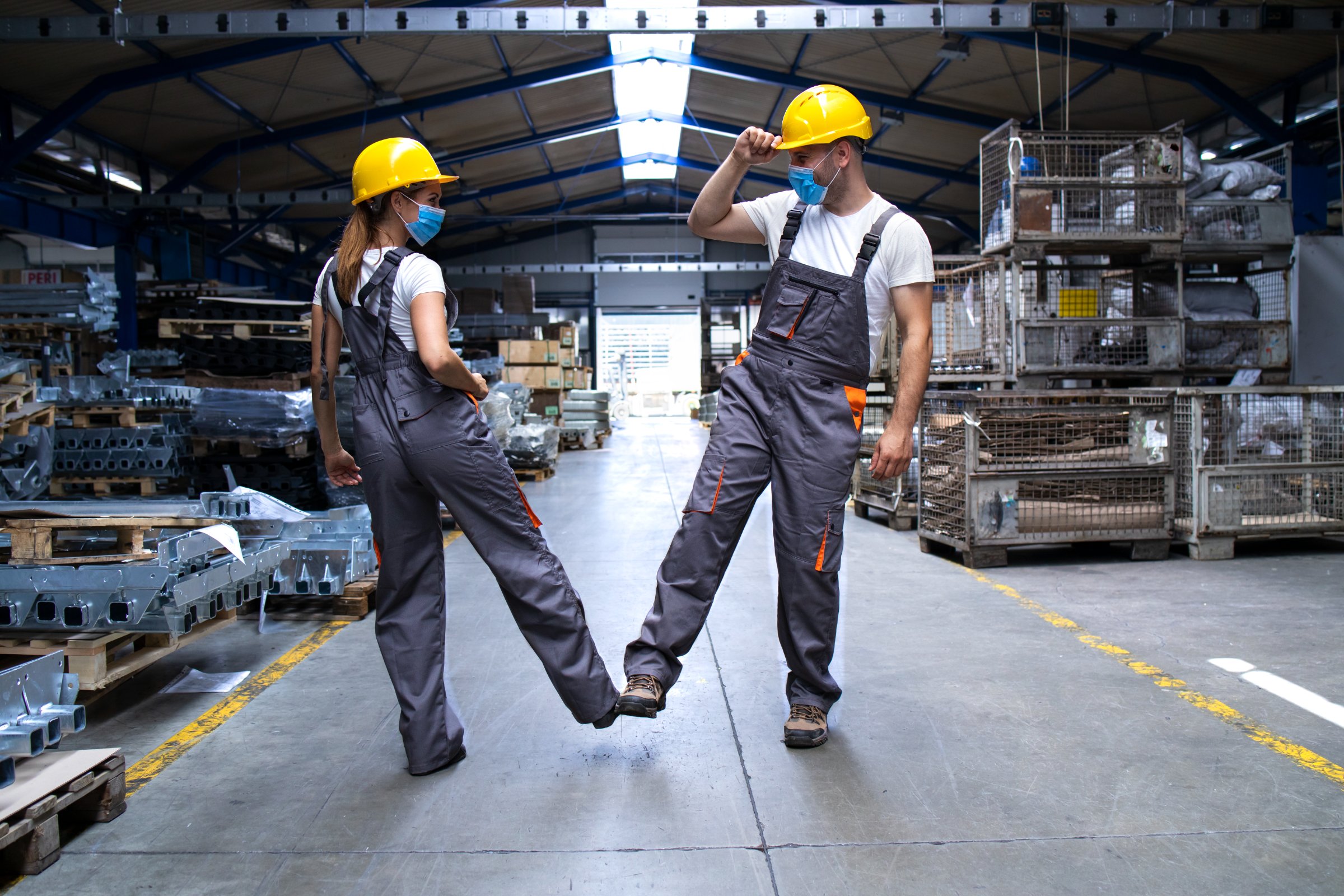
Leaders do not get to skip choosing; dance wisely on the manufacturing floor.
Key Takeaway
Give frontline supervisors the authority to fix concerns on the spot instead of escalating everything. And celebrate catches, not just compliance, so the person who spots the hazard gets recognized before it becomes a case number.

Related Articles

1 in 3 manufacturing employees have mental health challenges: How HR can help break the stigma on the frontline.
The clang of machinery, the hum of conveyors, the precise rhythm of assembly lines.These are the sounds that define manufacturing. But, beneath the noise, a quieter, intense struggle is often at play: long hours, demanding workloads and little room (and sympathy) for 'not feeling like yourself'.
Ready or Not, Here AI Come (to the Manufacturing Frontline)
AEM's 2026 outlook calls the human-machine handoff manufacturing's defining workforce priority, then names the constraint: value depends on human capability. The technology and capability plans are one program in that framing. In most companies they are two, on two clocks.

Safety Leadership on the Production Floor
How frontline supervisors are transforming safety culture in manufacturing.