
Turn Around, Frontline: Why Retail Associates Leave


The Frontline Factor — Retail has long lived with high turnover, but today the cost of attrition is too large to dismiss as “business as usual.” Each departure sets off a chain reaction of lost productivity, strained operations, and mounting replacement costs. For retail leaders, the question is no longer whether turnover matters—it’s how to address it strategically, before it undermines the entire store.
An email arrives in the district manager’s inbox.
Another new store associate, hired just before the season's big push, has resigned.
On the sales floor, the impact is tangible: a shift goes uncovered, the remaining team is stretched thin, and customer experience is compromised.
Every now and then, it gets a little harder to remain profitable
This isn't just a personnel issue; it's an operational challenge that affects profitability.
The retail sector has long dealt with high attrition, and the U.S. Bureau of Labor Statistics regularly reports some of the highest "quits" rates of any industry.
The financial impact is significant. While estimates vary, the Society for Human Resource Management (SHRM) notes that replacing a single hourly employee can cost between $1,000 and $4,000 in direct expenses.
When factoring in lost productivity and training, the total cost can easily reach several thousand dollars per departing employee, no small chunk of change.
Every now and then, it falls apart: addressing retail turnover
For retail leaders, addressing this turnover is a strategic priority. It involves building a more resilient, efficient, and profitable store environment.
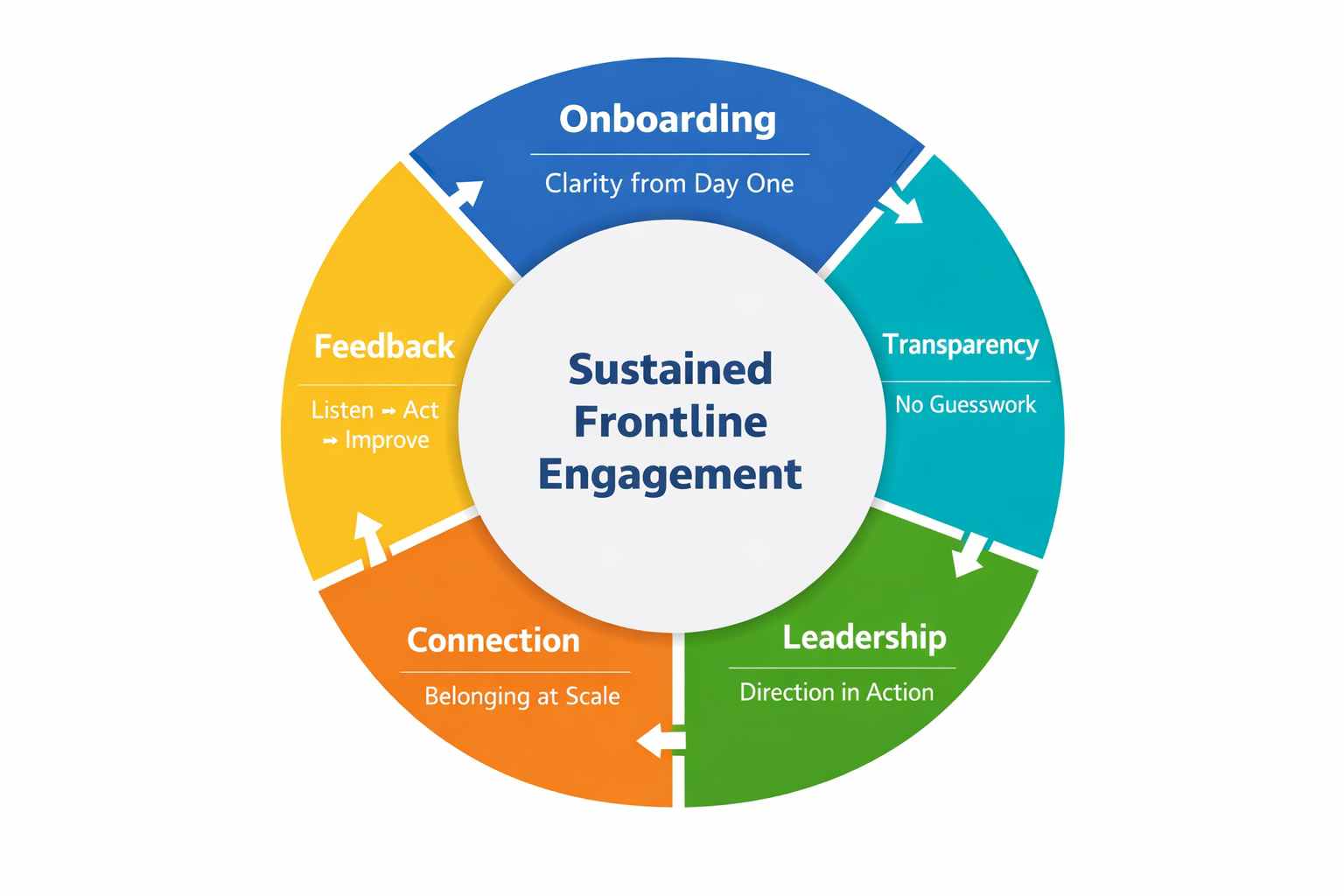
This requires moving beyond traditional onboarding methods and designing an associate journey that builds commitment from day one.
Here’s how leading retailers are approaching it, backed by data.
Onboarding: a successful first 90 days
The classic retail onboarding, such as an hour spent on training modules followed by a rapid start checking out customers or backfilling merchandise, can be a driver of early exits.
This represents a significant missed opportunity, as research from Gallup has consistently shown that organizations with a standardized onboarding process experience 50% greater new-hire productivity.Think of structured onboarding as a foundational tool for retention.
A report from the Brandon Hall Group reveals that organizations with a strong onboarding process improve new hire retention by 82%.
Instead of concentrating all information into the first day, provide a dedicated"shift buddy." Break training into modules that mix operations with culture.
Schedule regular check-ins. The goal is to make a new associate feel confident, capable, and connected.
The job preview: be upfront
A frequent cause for an early exit is is when the job doesn’t match up to what the employee thought it was going to be.
This "reality shock" is a well-documented driver of turnover.
A 2022 survey by The Muse found that 72% of workers have started a new job only to find the role or company was very different from what they were led to believe.
In today's market, transparency is an effective recruitment tool.
Let candidates see a realistic view of the role, including its challenges. Be upfront about expectations like weekend availability and the physical demands of stocking. By presenting a realistic job preview, you screen for a better fit and build a foundation of trust.
The store manager: a key driver of retention
The saying, "People don't leave bad jobs, they leave bad bosses," is supported by decades of management research.
An analysis by Gallup confirmed that managers account for at least 70% of the variance in team engagement scores .
A disengaged manager can undermine an otherwise effective onboarding program.
Investing in your store managers' leadership skills is therefore essential. A study featured in Harvard Business Review demonstrated that store managers who were rated as highly effective leaders had significantly lower turnover rates and higher sales in their stores.
Train them on how to give "in-the-moment" coaching, how to de-escalate customer
conflicts, and how to build a fair schedule. When managers are empowered to lead as coaches, they help cultivate loyalty.
Forging connection during the shift
A sense of belonging is a fundamental human need, and its absence can be a key factor in an employee's decision to leave.
A global report by McKinsey & Company found that employees who feel a strong sense of belonging at work are three times more likely to feel engaged and have a higher intent to stay with their organization.
In retail, connections must be intentionally built. Start every shift with a five-minute team huddle. Create "closing partners" so no one is left to manage end-of-day tasks alone. These small rituals create a social fabric that transforms a group of individuals into a
cohesive unit.
But we need you now, forever: the stay interview
Why wait for an exit interview to learn what went wrong? Proactive retail leaders are using "stay interviews" to get a real-time pulse on the store environment, and using task management to optimize communications and employee experience.
This involves regularly asking current employees what keeps them at the company and what might make them leave. Acting on the feedback is what builds trust.
When the team sees that a faulty scanner gets fixed or a recurring frustration is addressed, it sends a clear message: your input is valued. That feeling is a cornerstone of a committed, long-term employee.
The Frontline Take
Here’s the bottom line: solving the turnover problem is about running a better, more efficient store. Every associate who leaves takes time and money with them, pulling managers off the sales floor and into the back office to handle recruiting.
The answer isn’t a single, complex program, but a commitment to getting the fundamentals right. It means ensuring associates have a welcoming onboarding, an honest job preview, a manager who knows how to lead, and a team that feels connected to the work they do.
Key Takeaway
Retail turnover hurts profits, not just morale. Strong onboarding, honest job previews, supportive managers, and team connection keep associates engaged, reducing exits and building resilient teams.
Related Articles

Corporate Culls Versus the Frontline Crisis: Why You Can’t Cut Your Way to Retention
Recent headlines paint a stark picture: corporate giants like eBay are implementing significant layoffs, culling hundreds, sometimes thousands. How does this affect frontline resilience and employee retention?

Making it to the Playoffs: Seasonal Retail Tryouts Begin.
Retailers are expected to add about 450,000 seasonal workers this quarter, and most big names aren't announcing targets. A smaller, more surgical intake changes what each holiday hire is for, and who should be watching.
The Cost of Inconsistency: How Poor Scheduling Drives Up Retail Turnover
Chicago's revised Fair Workweek rules took effect June 1, 2026, and most retailers are reading the news as a compliance map. The costlier question is where schedule instability actually comes from, and how it affects retail turnover.