
AI Readiness in Retail: The Frontline Gap That Needs to Be Addressed.
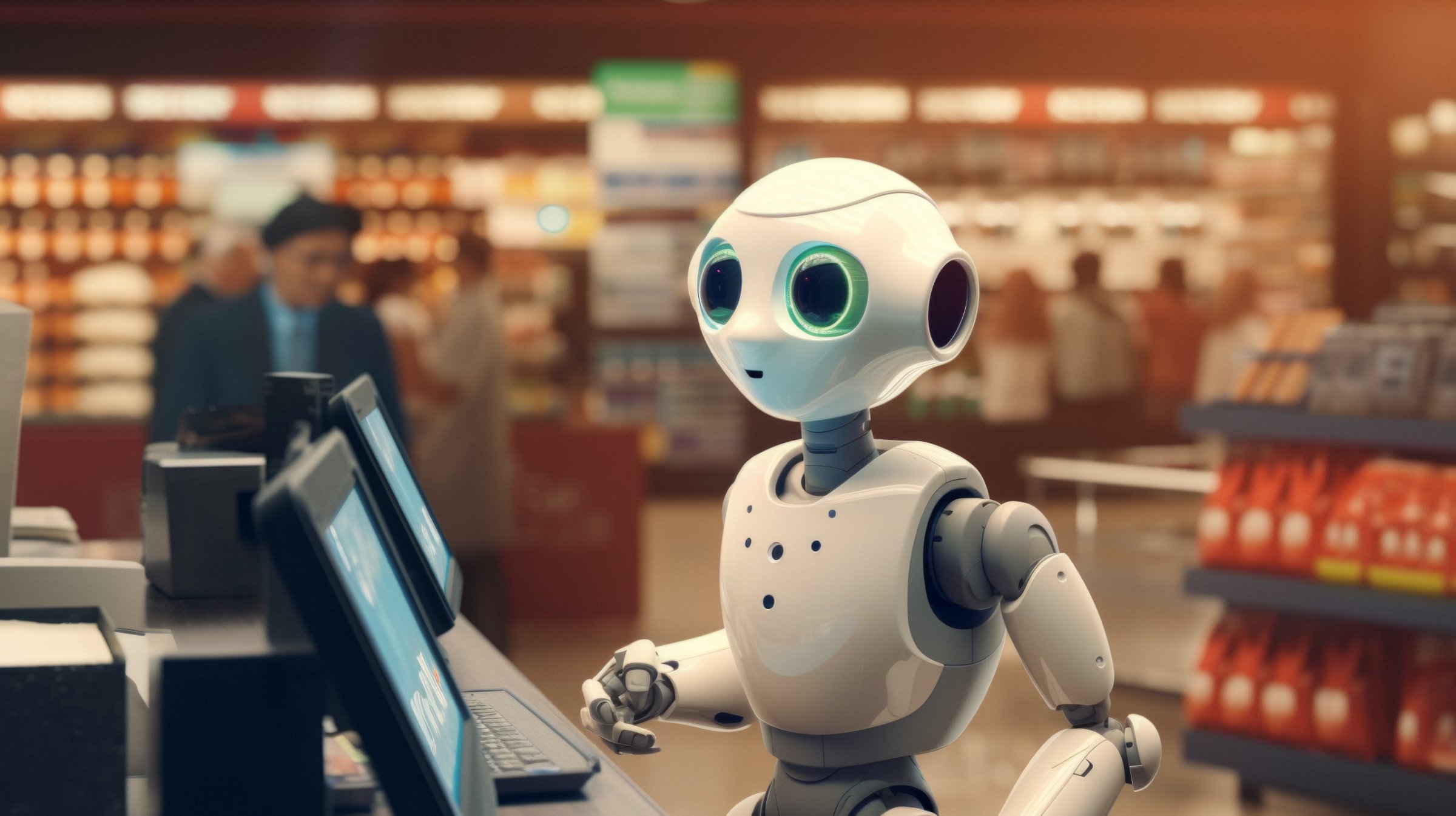

The Frontline Factor — Retail's AI ambition is racing ahead of AI readiness on the shop floor. Here's why workforce upskilling will decide which retailers win the next wave.
The retail industry faces a striking disparity in its AI ambitions.
Retailers are investing in technology faster than they are investing in the frontline teams essential for its success.
This creates a deepening chasm between strategic ambition and operational reality.
Many retailers risk failed AI deployments, not because the technology is flawed, but because AI readiness on the shop floor has not kept pace with the rollout, and frontline associates lack the skills to use new tools effectively.
This issue is underscored by Kyndryl's 2023 Retail Readiness Report, which found that 89% of retail leaders expect AI to transform job roles within 12 months, yet only 33% express concern about upskilling their workforce to meet this shift.
Generative AI in retail has reached the floor
Generative AI is rapidly moving from a theoretical concept to an operational reality across the retail industry. Its deployment optimizes nearly every facet of the customer journey and store operation, from the back office to the shop floor.
These applications inherently reshape the roles of frontline associates and store managers. They introduce new tools, new processes, and new expectations for how work gets done, directly impacting how store associates handle product and customer inquiries, manage inventory, and engage with customers.
For example, in merchandising and inventory management, AI-powered systems predict demand and optimize product placement. In customer service, chatbots manage initial queries, freeing human associates for more complex interactions.
AI also drives personalized recommendations by guiding shoppers with tailored product suggestions, often presented via associate-facing tablets. AI similarly enhances store operations and associate efficiency through intelligent scheduling and predictive analytics in stores.
It can identify potential theft, monitor stock levels on shelves, and analyze customer flow to optimize store layouts. These changes necessitate a fundamental shift in frontline capabilities amongst retail teams.
The AI readiness gap on the frontline
Despite the pervasive integration of AI, a significant disconnect exists between executive enthusiasm and frontline preparation.
Often, the initial investment prioritizes procuring and integrating AI platforms, with less immediate consideration for the human element required to fully leverage these tools. The true extent of behavioral and process changes required at the frontline is also frequently underestimated by leadership far removed from daily store operations.
Budgetary silos further contribute to the problem, as training budgets might not be directly linked to technology implementation budgets, leading to a scramble for resources after the technology is already deployed.
Some leaders might mistakenly believe that new AI tools are intuitive enough to require minimal training, overlooking the nuances of real-world application.
This oversight creates a critical vulnerability. AI's potential is unlocked not just by its existence, but by its effective adoption and skillful utilization by the employees who interact with its outputs daily.
The tangible impacts of the readiness gap: on the ground and on the balance sheet
When AI tools are parachuted in without thorough training and contextual understanding, frontline operations suffer.
This leads to significant, often hidden costs that erode profitability and employee morale. One common scenario illustrates this: associates rely on AI-generated recommendations they don't fully trust.
An AI system might suggest a specific product based on customer data, but if the associate hasn't been trained on why that recommendation is made, they make their own judgments based on the information they have to hand.
Ultimately, this leads to slower adoption and underutilization. The promised benefits of AI in retail may not materialize for months, resulting in a delayed or diminished return on investment (ROI). It can also lead to widespread employee dissatisfaction, which is not what you want in any change management process.
Another instance involves managers being asked to coach on tools they were never trained on. Store managers are pivotal to frontline performance, yet they are often the last to receive comprehensive training on new systems.
This forces them into a reactive, troubleshooting role rather than a proactive coaching one, diffusing their limited time and expertise. Such situations contribute to reduced employee morale and increased change fatigue.
Introducing new, complex systems without adequate support is a recipe for frustration. Associates may feel overwhelmed, undervalued, and resistant to future technological changes, potentially leading to attrition and a decline in overall employee engagement.
New systems can also add complexity instead of reducing it. An AI-powered inventory system designed to streamline restocking might, without proper training, appear overly complex to an associate unfamiliar with its interface or logic.
Such scenarios lead to inconsistent customer experiences; if some associates are proficient with AI tools while others are not, customers will receive inconsistent service. This directly impacts brand perception and customer loyalty, leading to lost sales and negative word-of-mouth.
AI data in, AI data out
KPMG's AI in Retail Report emphasizes how trust and reliable data are paramount in customer interactions. When people are untrained, under-prepared, or distrustful of new AI tools, the technology's promise fades. This results in a lost competitive advantage.
Competitors who invest in both AI technology and their people will pull ahead, delivering superior customer experiences and operational efficiency. The undertrained retailer risks falling behind, unable to fully capitalize on the potential of AI to drive growth and innovation.
The hidden cost of undertraining potentially understaffed retail employees is a direct threat to the very strategic objectives that motivated the AI investment in the first place.
How leading retailers close the gap
For retailers looking to harness the full power of AI, successful implementation hinges on a proactive and holistic approach that prioritizes workforce readiness. Leading organizations understand that embedding AI effectively requires more than just technology rollout; it demands thoughtful people strategies.
Leading retailers typically involve store leaders early, bringing store managers and district leaders into the AI planning process from the conceptual stage. Their practical insights into daily operations and frontline challenges are invaluable for designing usable tools and effective training programs.
This early involvement fosters buy-in and ownership. They also pilot tools with frontline feedback. Instead of a broad, immediate rollout, they implement new AI tools in select pilot stores.
They actively solicit and incorporate feedback from associates and managers using the tools in real-world scenarios. This iterative approach allows for adjustments to the technology, processes, and training before widespread deployment.
These retailers build role-based training programs, tailoring content to the specific roles and tasks of different frontline employees. A sales associate needs different training from a stockroom associate, and a store manager needs yet another.
Training focuses on how the AI tool helps them do their specific job better, and provides practical, hands-on experience, not just theoretical understanding. Leading retailers measure adoption, not just deployment.
Success metrics extend beyond simply installing the software; they track key performance indicators (KPIs) related to actual usage, proficiency, and the impact of the AI tools on frontline efficiency and customer satisfaction. This includes assessing if associates are actually using AI inventory scanners and if managers are confidently using AI-driven scheduling.
Moreover, they reward managers for successful implementation. This could include recognition, bonuses tied to team proficiency scores, or demonstrated improvements in operational metrics directly influenced by AI usage. Empowering managers to champion change is critical.
Finally, these organizations create continuous learning pathways. AI technology is constantly evolving, and so too should frontline training.
They establish ongoing learning modules, refresher courses, and internal communities of practice where employees can share best practices and troubleshoot issues, embedding learning into the daily workflow. By adopting these strategies, HR and operations leaders can ensure that their AI initiatives are not just technological marvels but also operational successes, driven by a confident and capable frontline workforce.
The Frontline Take
Bridging the AI Readiness Gap is Critical
The future of AI in retail is being shaped by decisions made now. AI promises to redefine efficiency, customer engagement, and profitability. However, the true beneficiaries of this technological wave will be those that make an equally profound investment in their people. Whe
This means moving beyond a purely technological lens and embracing a human-centric approach to AI implementation. By involving frontline leaders early, designing role-specific training, and celebrating successful adoption, retailers can transform AI from a daunting disruption into a powerful enabler for their most valuable asset: their people.
For those who prioritize human enablement alongside technological advancement, the AI era promises not just incremental gains, but a fundamentally more agile, intelligent, and customer-centric retail future.
Key Takeaway
The readiness gap surfaces as concrete AI adoption challenges inside stores. When AI tools are parachuted in without thorough training and contextual understanding, frontline operations suffer.
Related Articles

Supersize Me, Ronald: McDonald's New Strategy Is Ready. Is the Crew?
McDonald's are reinventing their restaurants globally through their 2026 NEXT growth strategy. The real test is what happens on the crew side. Are the frontline crew ready to adapt?

The Shelf Talks Back on Digital Tags: What Walmart Associates Are Telling Us on Social Media
Walmart's digital shelf label rollout is now landing on the floor and associates are starting to talk. Their early feedback reveals a familiar pattern in retail tech deployments: the bigger the headquarters bet, the more friction shows up at the shelf edge.

One AI Closed: Most retail companies in 2026 are using AI to manage frontline workers, without managing risks.
AI is already making employment decisions on your shop floor: scheduling shifts, flagging performance, screening candidates. Without a secure governance framework, that's a liability problem.